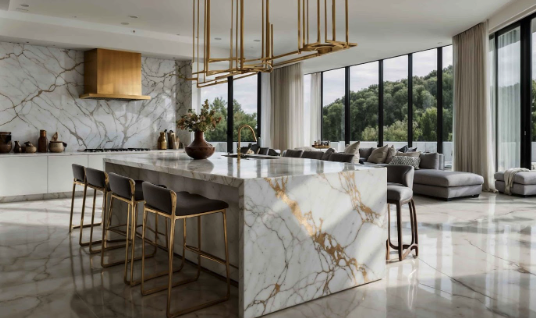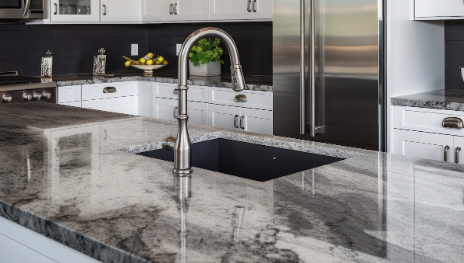

Granite countertops are loved for a reason—but they’re not flawless.
They redefine kitchens, boost resale value, and hold up against heat and wear. But for every homeowner who’s thrilled with their choice, there’s another who didn’t expect the upkeep, the seams, or the sealant schedule. Granite isn’t a one-size-fits-all material, and going in with only half the story can lead to full-blown regret.
In this post, we’ll walk you through the real pros and cons of granite countertops, how to know if it’s the right fit for your kitchen, and what life with granite actually looks like—day one and year ten.
Why Granite Countertops Still Stand Out in 2025
Granite countertops have long been a go-to for kitchens and bathrooms, but what exactly makes granite worth it?
It’s not just hype. It’s the staying power.
Granite has held its place in American kitchens for decades, outlasting design fads and trending materials that come and go. It’s a material that doesn’t flinch at daily wear—and still looks like you meant to spend good money on it. In 2025, with more choices than ever—porcelain, quartz, ultra-compact surfaces—granite remains a top contender because it offers what few others can: timeless beauty with a natural origin story.
But let’s be clear. What makes granite worth it isn’t just its name or reputation. It’s what it brings to real kitchens, under real conditions.
And that’s where most people get it wrong.
They love the stone, but don’t fully understand the day-to-day realities. Or worse, they don’t ask the questions that matter until the install is done and the first spill hits the counter. That’s why the next part of this guide matters most.
We’re not just here to celebrate granite—we’re here to spell out exactly what you’re getting into. Let’s start with the upsides. There are a lot. But they only hold their weight if you know how to use them.
The 8 Pros of Granite Countertop Surfaces
Below are some of the most impressive of the many benefits of using granite for countertop surfaces
1. Every Granite Slab Is One-of-a-Kind
No two granite countertops are ever exactly alike. Mined from natural stone, each slab carries its own unique mix of color and pattern—no prints, no repeats, no shortcuts. If your goal is to avoid the cookie-cutter kitchen look, granite delivers authenticity in every inch. And that uniqueness sets the tone for everything else.
And if you’re investing in something one-of-a-kind, it better be able to hold up. That’s where durability comes in…
2. Granite Is Naturally Durable and Heat Resistant
Granite doesn’t flinch at hot pots and pans. It resists scratches, shrugs off daily use, and doesn’t melt under pressure—literally. That strength isn’t just nice to have. It’s what turns your unique slab into a hardworking part of your kitchen. You’re not just buying beauty; you’re buying backbone.
But a strong material means nothing if it doesn’t pay off long-term. So, how does granite stack up when it comes to value?
3. Boosts Your Home’s Resale Value
Homebuyers notice granite. It signals care, quality, and investment in the space. Whether you’re planning to sell or simply want to protect your asset, granite’s reputation pays you back. A kitchen with granite countertops isn’t just more enjoyable now—it becomes a selling point later.
And if you’re remodeling for resale or for keeps, you want a material that flexes with your design.
4. Works With Nearly Any Kitchen Design
From modern minimalism to farmhouse warmth, granite’s natural variation pairs beautifully with most cabinet colors and layouts. Its range of colors means you can match it with your current kitchen or build a whole new palette around it. So you’re not boxed into a style—granite gives you room to grow.
It’s not just the look—it’s how it holds up that matters.
5. Stands Up to Daily Use—If Properly Sealed
Granite is porous, but that doesn’t have to be a problem. With proper sealing, granite resists stains and stays protected through years of spills, splashes, and sauces. A little regular maintenance goes a long way, turning this natural material into a long-haul performer.
Plus, the way it integrates with your kitchen setup? That’s another advantage…
6. Pairs Well With Undermount Sinks and Modern Features
Because granite is cut to size, it works beautifully with custom installs like undermount sinks, waterfall edges, and integrated appliances. It brings not just surface appeal, but seamless functionality. The little details that make your kitchen smarter and sharper? Granite supports them all.
7. Natural Beauty You Can’t Fake With Laminate
Granite isn’t printed. It’s pulled from the earth. That depth, texture, and richness can’t be duplicated with laminate or engineered lookalikes. When guests walk into your kitchen, they feel the difference—visually and physically. It’s a presence, not just a pattern.
That presence matters more when the material is built to last. Let’s talk longevity.
8. A Long-Term Investment, Not a Short-Term Trend
Granite doesn’t age out. It doesn’t ride a style wave and crash later. For decades, it’s been one of the best countertops for homeowners who care about durability, beauty, and return on investment. When done right, granite becomes part of the house’s legacy, not just the current look.
But as good as granite sounds, it’s not for everyone. Now let’s talk about the trade-offs.
Four (4) Cons of Granite Countertops
Here’s what to keep in mind before falling in love with granite, because even the best materials come with a tradeoff.
1. Granite Is Porous Without a Sealant
Granite may be tough, but it’s still a natural stone, which means it’s naturally porous. Without a sealant, liquids can seep in and leave permanent stains. That’s why regular sealing is non-negotiable if you want granite that lasts. The good news? Sealing isn’t daily maintenance—it’s a once-a-year ritual that protects your investment. If you’re not the type to stay on top of small tasks, though, this is something to consider carefully.
2. You Might See Seams—Especially With Exotic Granite
Granite slabs are stunning, but they’re not always cut to fit your layout perfectly. That’s when seams come into play. In most kitchens, especially large ones or complex layouts, seams are inevitable. And with exotic granite—those rare, dramatic patterns—matching up the color and movement across slabs can be tricky. It won’t ruin the look, but it’s worth knowing so you set the right expectations during your granite selection process.
3. It’s Heavy and Needs Professional Installation
Granite is dense. That’s part of what makes it so strong, but also why it demands professional installation. It’s not a DIY weekend project. You need trained fabricators who understand how to support the type of granite you choose and safely anchor it to your cabinets. Skimping here risks cracked corners or uneven leveling. But handled properly? You’ll have a surface that feels like it’s built into your home forever.
4. Price Varies Widely Depending on the Slab You Choose
Granite’s price tag isn’t one-size-fits-all. It depends on the specific slab, the color rarity, and how far it had to travel to reach your kitchen. While some granite is surprisingly affordable, exotic pieces of granite can spike the per-square-foot cost. It’s not about the cheapest option—it’s about value. With the right selection, granite still offers a strong return on both style and resale value.
The Bottom Line: Is Granite the Right Countertop for You?
Granite isn’t just a countertop material; it’s a long-term commitment to natural beauty, resilience, and craftsmanship. But like any meaningful investment, it comes with expectations: proper sealing, careful installation, and a thoughtful match to your kitchen’s daily rhythm.
If you want something that looks stunning, holds up under pressure, and adds value to your home over time, granite remains one of the best countertops you can choose. It’s not just about what it is—it’s about what it becomes: a centerpiece in your kitchen, a surface that lasts, and a decision you’ll stand behind for years.
Just don’t go into it blind. Ask questions. Choose your slab carefully. And trust a team that treats the stone—and your space—with respect.
Let us help you find the perfect granite slab for your kitchen or bathroom—installed with precision and backed by experience. Reach out today and let’s make your next project unforgettable.
Frequently Asked Questions about Granite for Kitchen or Bathroom
1. Are granite countertops worth it in 2025?
Yes—granite countertops remain a popular choice for kitchens due to their durability, natural beauty, and strong resale value. As long as you understand the upkeep—mainly sealing—they deliver long-term value and timeless design.
2. Does granite require a lot of maintenance?
Granite is naturally porous, which means it needs to be sealed and resealed over time to resist stains. With proper sealing, however, maintenance is minimal—just mild soap and water for daily cleaning.
3. Is granite better than quartz for kitchen countertops?
It depends on your priorities. Granite countertops are made from natural stone, offering unique color and pattern variations. Quartz, on the other hand, is engineered for consistency, non-porous, and low-maintenance. If you prefer character and don’t mind sealing, go granite. For ease and uniformity, quartz wins.
4. How much do granite countertops cost?
The cost of granite countertops depends on the type of granite you choose, the size of your kitchen or bathroom, and the details of the installation. Because pricing can vary widely, the best way to get an accurate number is to request a personalized estimate. We’ll walk you through options and give you a clear, no-surprises quote based on your space and style.